Urbanization and Social Transformation
Urbanization represents one of the most significant processes in human development, marking the transition from dispersed rural communities to dense, organized urban centers. Cities emerged as hubs of political authority, economic activity, cultural exchange, and technological innovation. Over time, urban living reshaped social relationships, labor systems, and human interaction with the environment.
While early cities developed as administrative and religious centers, modern urbanization expanded rapidly through industrialization and globalization. The growth of cities altered social hierarchies, family structures, and patterns of inequality, making urbanization both a driver of progress and a source of complex social challenges.

The Origins of Urban Life
The earliest cities emerged alongside agricultural surplus and centralized governance. Settlements such as Uruk in Mesopotamia, Mohenjo-daro in the Indus Valley, and ancient Egyptian cities developed systems of administration, trade, and religious organization capable of supporting large populations.
These early urban centers were characterized by social stratification, with distinct roles for rulers, priests, artisans, merchants, and laborers. Urban planning included defensive walls, public buildings, and infrastructure for water management, reflecting early attempts to organize complex human societies.
Urban Growth in Medieval and Early Modern Societies
During the medieval period, cities functioned as centers of trade, craftsmanship, and political power. European towns grew around marketplaces and fortifications, while cities in the Islamic world and Asia became hubs of scholarship, manufacturing, and long-distance commerce.
Guild systems regulated labor and training, shaping professional identity and economic stability. Urban autonomy increased in some regions, allowing cities to develop local governance structures that challenged feudal authority and contributed to the emergence of modern civic institutions.

Industrialization and Rapid Urban Expansion
The Industrial Revolution triggered unprecedented urban growth as factories concentrated labor in cities. Millions migrated from rural areas seeking employment, transforming cities into densely populated industrial centers. This rapid expansion reshaped housing, transportation, and public infrastructure.
Industrial urbanization introduced new social challenges, including overcrowding, poor sanitation, and labor exploitation. In response, social reform movements emerged, advocating improved housing, education, healthcare, and labor rights. These reforms laid the foundation for modern urban governance and social welfare systems.
Urbanization and Social Transformation
Urban living altered traditional social structures by weakening extended family systems and increasing individual mobility. Cities brought together diverse populations, encouraging cultural exchange while also intensifying social divisions based on class, ethnicity, and occupation.
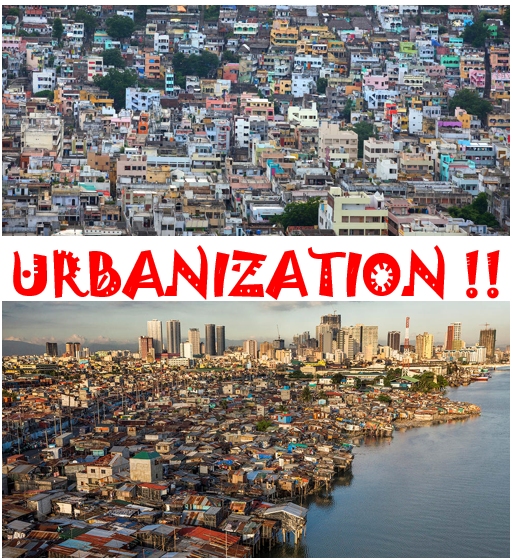
Education, employment opportunities, and access to services expanded in urban areas, contributing to upward social mobility for some groups. At the same time, urban poverty and informal settlements highlighted persistent inequalities within rapidly growing cities.
Contemporary Urban Challenges and Opportunities
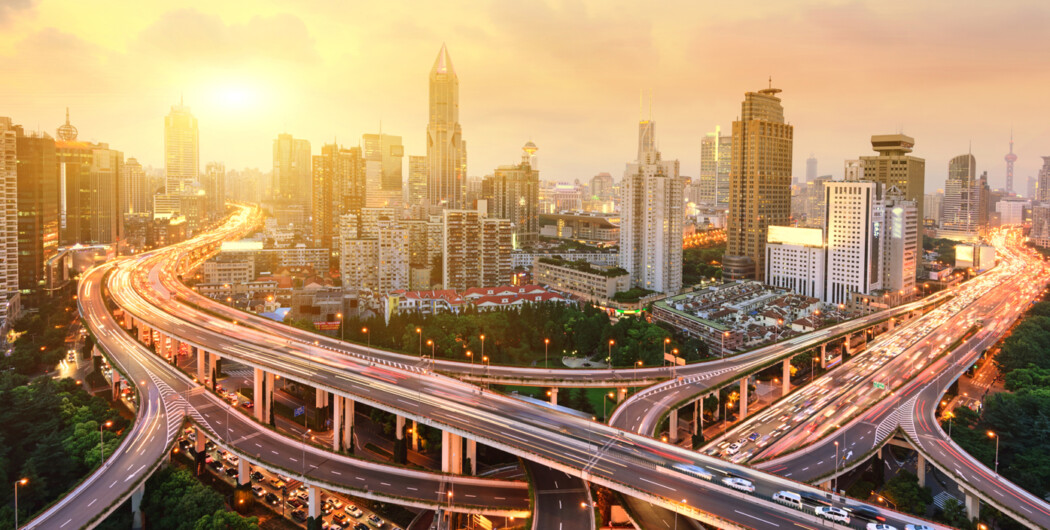
In the contemporary era, cities are home to more than half of the world’s population. Megacities serve as economic and cultural engines, driving innovation and global connectivity. However, rapid urban growth places pressure on infrastructure, housing, and environmental sustainability.
Urban planning increasingly emphasizes sustainability, public transportation, and inclusive development. Smart cities, renewable energy integration, and digital governance reflect ongoing efforts to balance economic growth with social equity and environmental responsibility.