Medieval & Early Modern Era
The Medieval and Early Modern Era represents a long and complex transitional phase in human history, bridging the ancient world and the foundations of modern global society. This era witnessed the reorganization of political power, the rise and decline of empires, the institutionalization of religious authority, and profound transformations in science, economics, and governance.
Far from being a period of stagnation, this era was marked by continuous adaptation and innovation. Feudal systems structured social order, religious institutions shaped worldview and morality, and expanding trade networks connected distant regions. Over time, intellectual revival, technological progress, and global exploration fundamentally altered humanity’s understanding of the world.

Feudal Societies and Political Organization
Following the decline of centralized Roman authority in Europe, feudalism emerged as a dominant system of political and economic organization. Power was decentralized, with land serving as the primary source of wealth and authority. Kings granted land to nobles in exchange for military service, while peasants and serfs worked the land under obligations of labor and loyalty.
Similar hierarchical systems existed beyond Europe. In Japan, the samurai class and shogunate governed through military authority and rigid social codes. In the Islamic world, caliphates and sultanates administered vast territories through bureaucratic governance, taxation systems, and legal frameworks rooted in religious law. These structures provided stability while limiting social mobility.
Religious Institutions and Cultural Authority
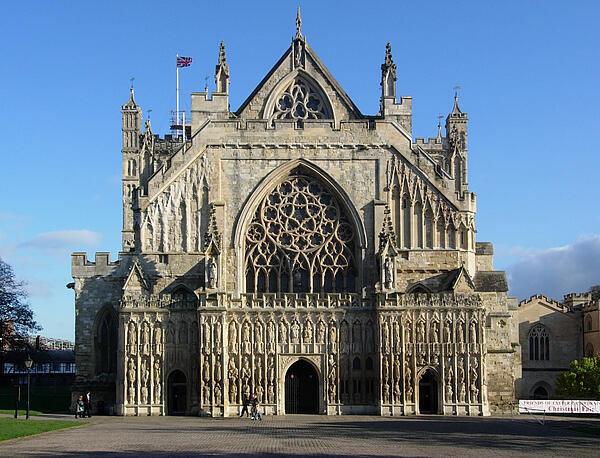
Religion was the central organizing force of medieval life. In Europe, the Christian Church wielded immense influence over education, morality, and political legitimacy. Monasteries preserved ancient knowledge, produced manuscripts, and served as centers of learning during periods of political instability.
Elsewhere, Islamic civilization experienced a cultural and scientific flourishing known as the Islamic Golden Age. Scholars in Baghdad, Cordoba, and Cairo advanced mathematics, medicine, astronomy, and philosophy, translating and expanding upon Greek, Persian, and Indian knowledge. Religious institutions shaped law, ethics, and social order across vast regions.
Scientific and Intellectual Transformation
Intellectual life during this era evolved through dialogue between faith and reason. Universities emerged in Europe, formalizing education in theology, law, medicine, and philosophy. Scholastic thinkers sought to reconcile religious doctrine with rational inquiry, laying groundwork for scientific methodology.
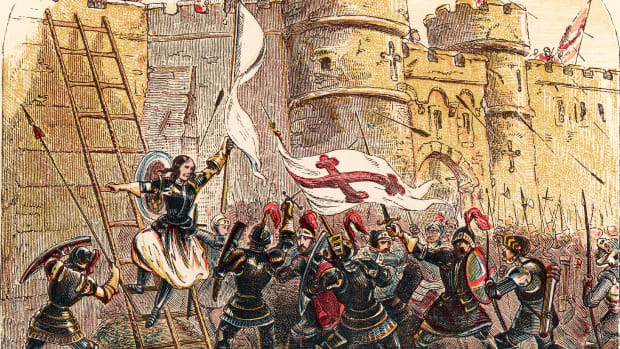
Technological advancements transformed daily life and warfare. Innovations such as the heavy plow, windmills, mechanical clocks, and improved metallurgy increased agricultural productivity and economic complexity. The introduction of gunpowder and firearms altered military strategy and weakened feudal power structures.
Exploration and Global Expansion
The later phase of this era witnessed unprecedented global exploration. Motivated by trade, religious expansion, and political ambition, European powers embarked on maritime voyages that connected continents. Advances in navigation, shipbuilding, and cartography enabled long-distance sea travel.
These encounters reshaped global history. The Columbian Exchange transferred crops, animals, diseases, and populations between hemispheres, dramatically altering ecosystems and societies. While exploration expanded knowledge and commerce, it also resulted in colonization, exploitation, and profound human suffering.
:max_bytes(150000):strip_icc()/GettyImages-52149332-5c4a2383c9e77c000160e390.jpg)
Political Transformation and the Rise of the Modern State
Over time, centralized monarchies strengthened authority through taxation, standing armies, and legal reform. Feudal loyalties gradually gave way to national identities and bureaucratic governance. The decline of feudalism coincided with the rise of mercantile economies and urban centers.
Political thought evolved significantly during the early modern period. Ideas concerning sovereignty, individual rights, and governance emerged through philosophical inquiry and political conflict. These developments laid the intellectual foundations for constitutional government, revolution, and modern democratic institutions.